
Selected Work
Examples of community-engaged research, mixed-methods evaluation, systems assessment, and participatory visual methods completed by members of our team.
This portfolio reflects work completed through nonprofit, university, and collaborative research roles. Each example identifies the institution or partnership through which the work was conducted.
Research & Evaluation in Practice
Selected experience reflects work completed by members of our team through nonprofit, university, and collaborative research roles.
Community Coalition Evaluation
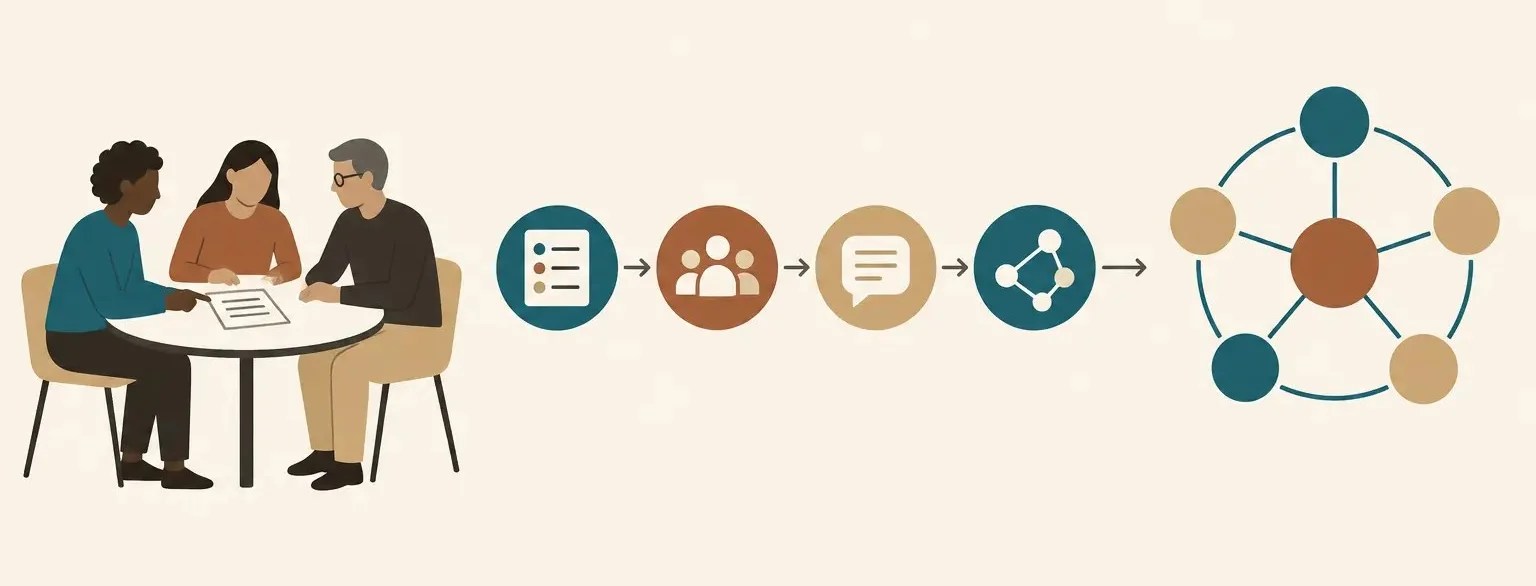
Need: A countywide suicide-prevention coalition needed an independent assessment of its collective-impact structure, including backbone coordination, communication, and cross-sector functioning.
Approach: A 13-month mixed-methods evaluation combined stakeholder surveys, meeting observation, document review, thematic coding, and systems mapping.
Result: Backbone communication and workgroup functioning improved. The analysis identified care-coordination gaps, access to lethal means, and stigma as prominent factors informing coalition-wide, culturally responsive prevention recommendations.
Work completed by Behavioral Science Research Institute, Inc.
Details anonymized at the partner’s request.
Physician Migration Study · Puerto Rico
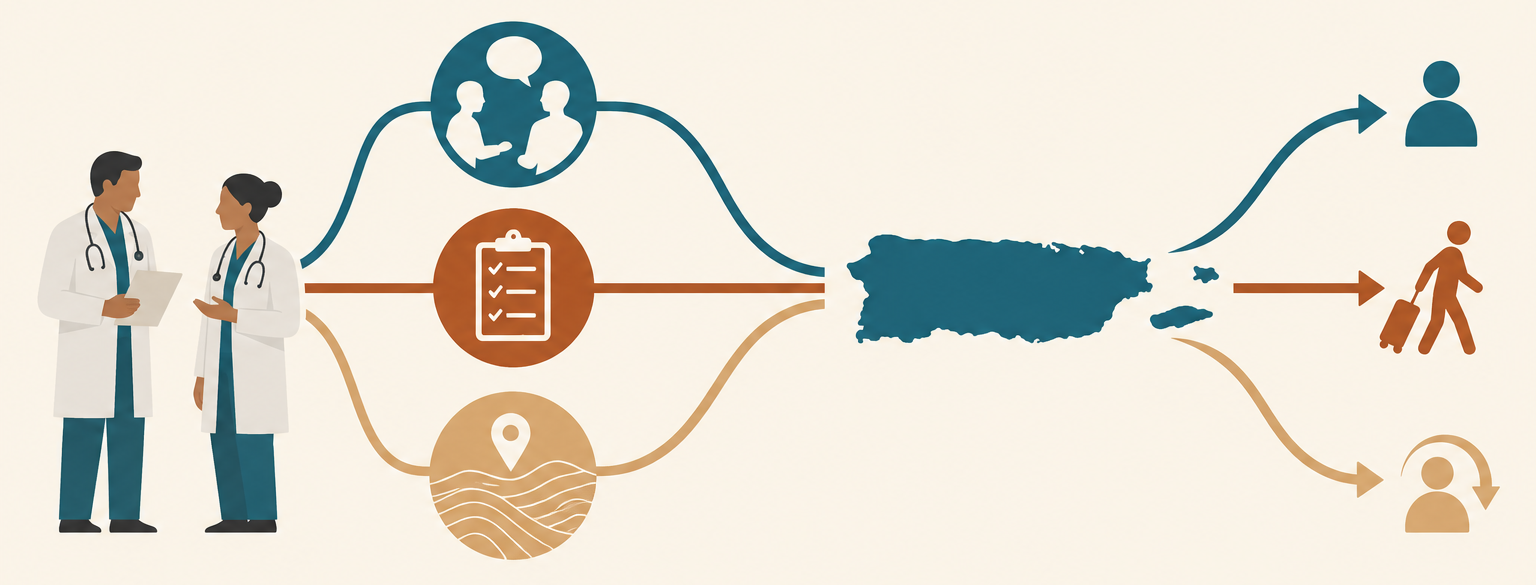
Need: FIU’s PLACES research team needed an innovative way to reach physicians in Puerto Rico and abroad and examine the causes and consequences of physician migration.
Approach: A randomized bilingual survey of 550 physicians from Puerto Rico’s official licensing registry was paired with a newly developed spatial-stigma measure, interviews, and ethnographic fieldwork. The three methodological strands were conducted in parallel and then triangulated.
Result: The research identified spatial stigma as an important influence on migration decisions beyond economic push-and-pull factors. Findings were published in Global Public Health, Health Policy Open, Medical Anthropology Quarterly, and Social Science & Medicine and informed physician-retention policy recommendations.
A research project led by researchers from Florida International University’s Research Center for Health and Society, funded by the National Institutes of Health.
Regional Behavioral Health Needs Assessment
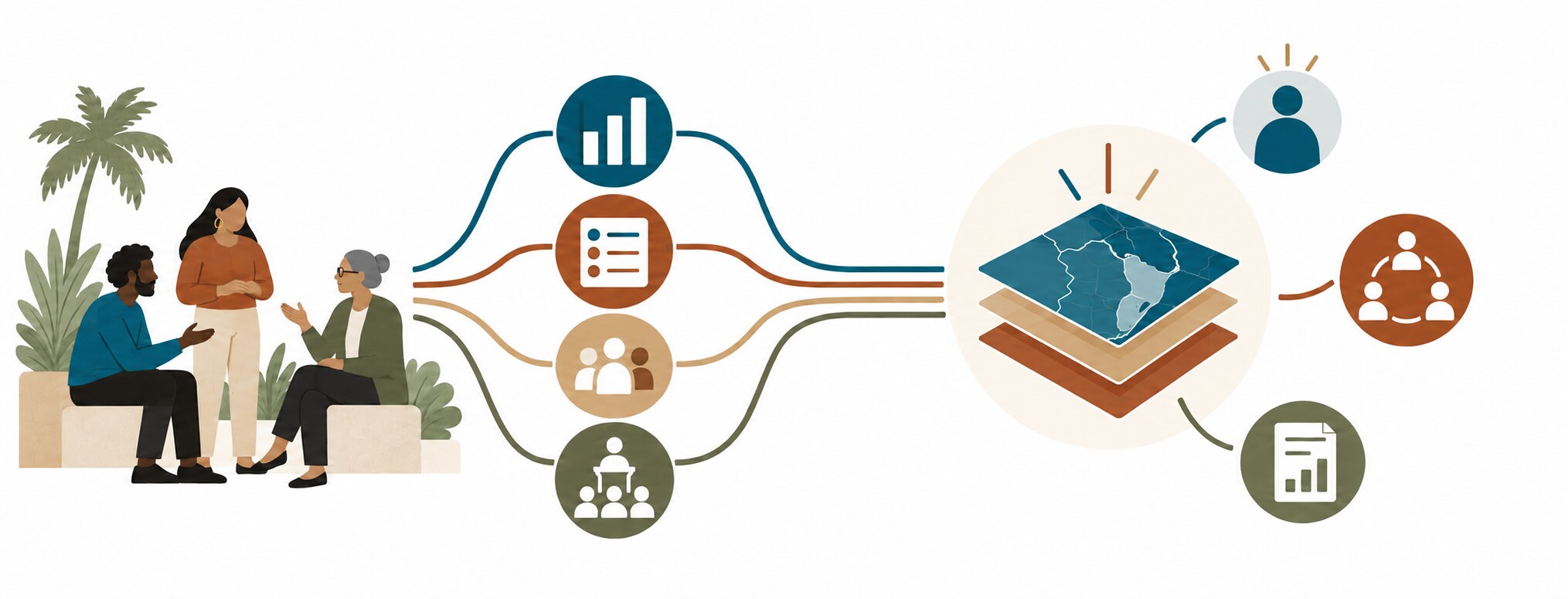
Need: Thriving Mind South Florida required its 2025 triennial assessment to identify service capacity, unmet needs, gaps, and opportunities across the behavioral-health safety net serving Miami-Dade and Monroe counties.
Approach: Over nine months, the mixed-methods assessment integrated regional socioeconomic and health indicators, multiple years of service-system data, and three surveys with extensive community engagement. The qualitative work included 13 focus groups with 65 participants and three community town halls offered in person and virtually. Contributors included people receiving services, peers, family members, frontline and executive providers, network organizations, and community stakeholders.
Result: The assessment brought quantitative trends and lived experience into one evidence base, producing priorities related to awareness and stigma, access and referral pathways, care coordination, children’s services, suicide prevention, peer support, and behavioral health and housing. The public report provides a foundation for Thriving Mind’s strategic planning and service priorities.
Work completed by Behavioral Science Research Institute, Inc.
Participatory Visual Methods
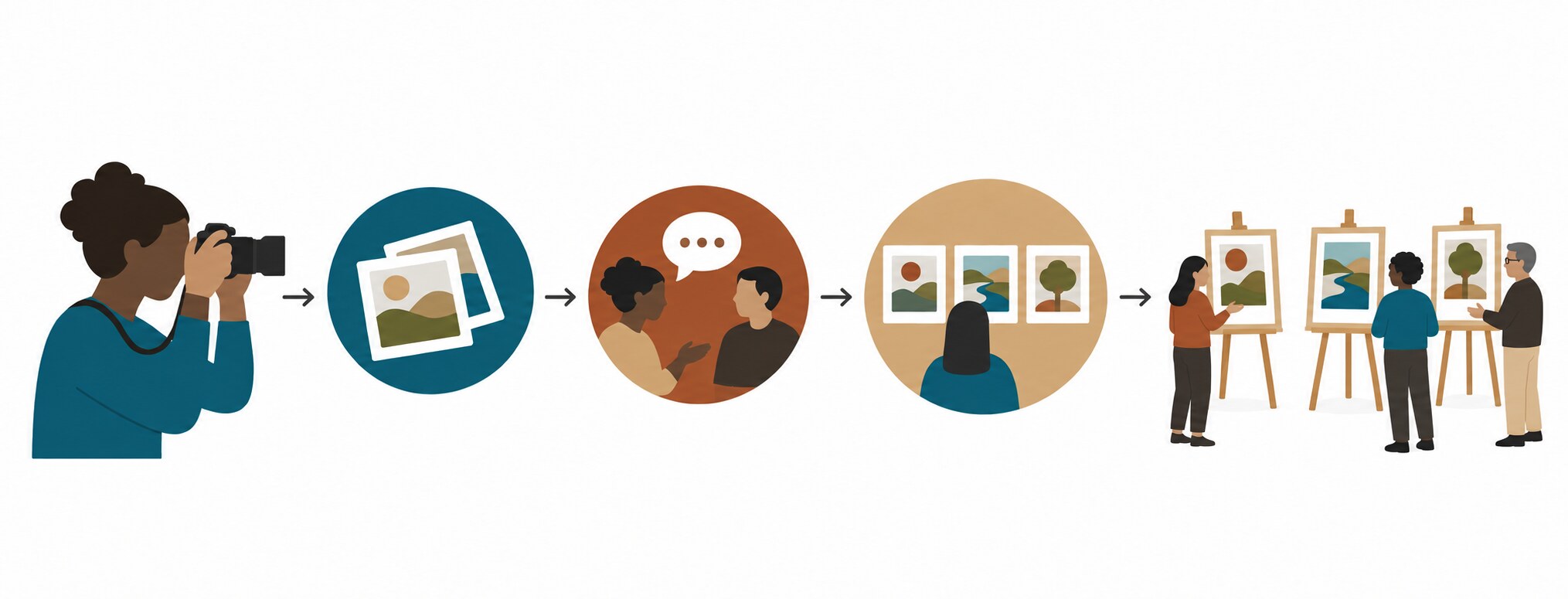
Photovoice combines participant-created photography, facilitated dialogue, and public presentation to document experience and communicate community priorities.
Photovoice · Housing
Equitable Pathways to Housing
Purpose: Understand how people moving from unsheltered homelessness into housing experienced outreach, service navigation, and the transition into housing.
Role: Jack designed and co-facilitated the Photovoice component with project director Matthew Marr.
Approach: Participant-photographers documented their experiences and developed accompanying narratives. The resulting gallery was shared with the Miami-Dade County Homeless Trust and published online as part of a broader multi-method study that also includes interviews, observations, and HMIS analysis.
Contribution: The gallery created a participant-centered record that complements the project’s other forms of evidence and supports partner learning.
A research project led by Florida International University researchers, funded by the National Alliance to End Homelessness, and facilitated by the Miami-Dade County Homeless Trust.
Photovoice · Community Development
Habana Pedazos · Havana, Cuba
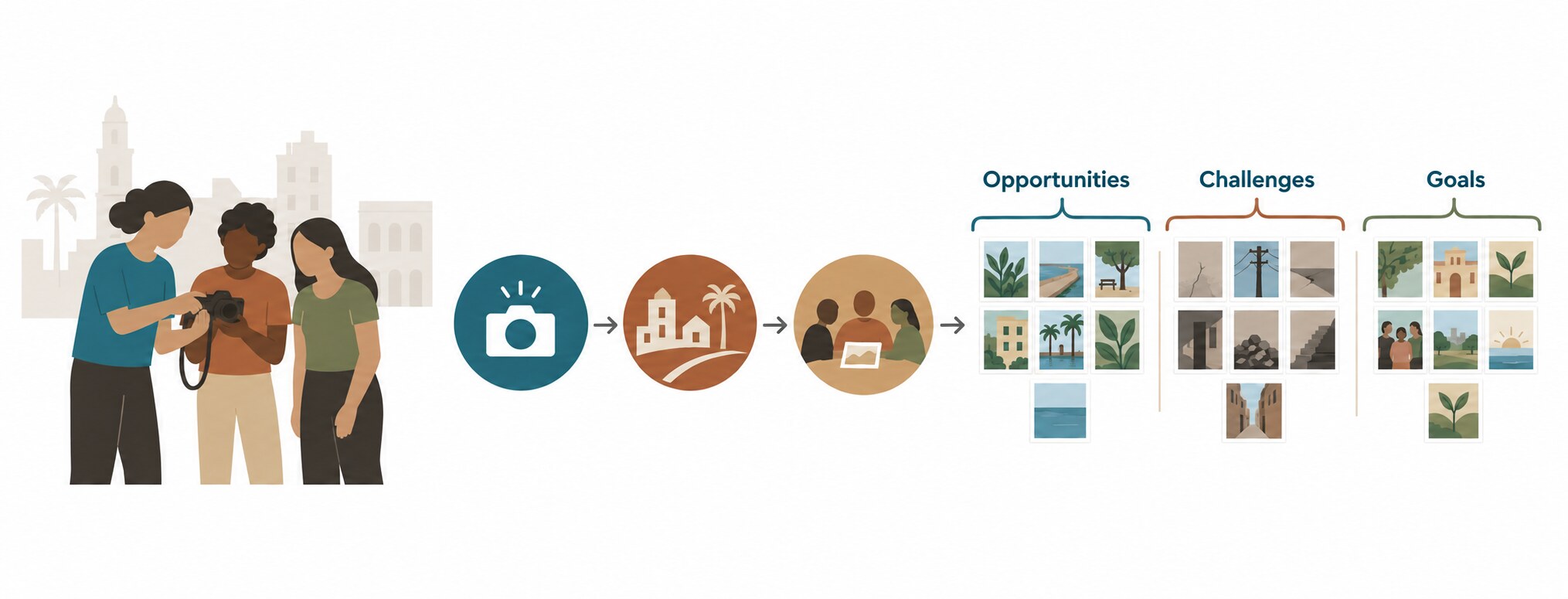
Purpose: Support community organizations in identifying and communicating their neighborhoods’ opportunities, challenges, and primary goals.
Role: Jack created and facilitated the project with support from the participating organizations and Mitra Ghaffari.
Approach: Seven community projects participated in photography and basic ethnographic training, producing three photographs each around the themes of opportunities, challenges, and primary goals.
Contribution: The project produced the 21-image Habana Pedazos gallery and a community exhibition organized around the participating organizations’ perspectives.
Created with the Red de Proyectos Comunitarios de La Habana, Mitra Ghaffari, Proyecto Vida, Proyecto Akokán, Azules del Malecón, Entimbalao, Artecorte, Contramuros, and Fundamentación Cabildo.
Have a question that could become our next collaboration?
Tell us what you are trying to understand, improve, or demonstrate. We can help determine what evidence and approach would be most useful.

